
Using Rice as an Adjunct in Beer Brewing
Posted in Adjuncts July 25, 2025 at 7:50:04 AM UTC
Beer brewing has undergone a remarkable transformation over the centuries. Brewers have always strived to enhance the quality and character of their brews. The use of adjuncts, such as rice, has become increasingly popular in this pursuit. The inclusion of rice in beer brewing began in the mid-19th century. It was initially used to counter the high protein levels in 6-row barley. This innovation not only improved the beer's clarity and stability but also contributed to a lighter, cleaner taste. Read more...
Brewing
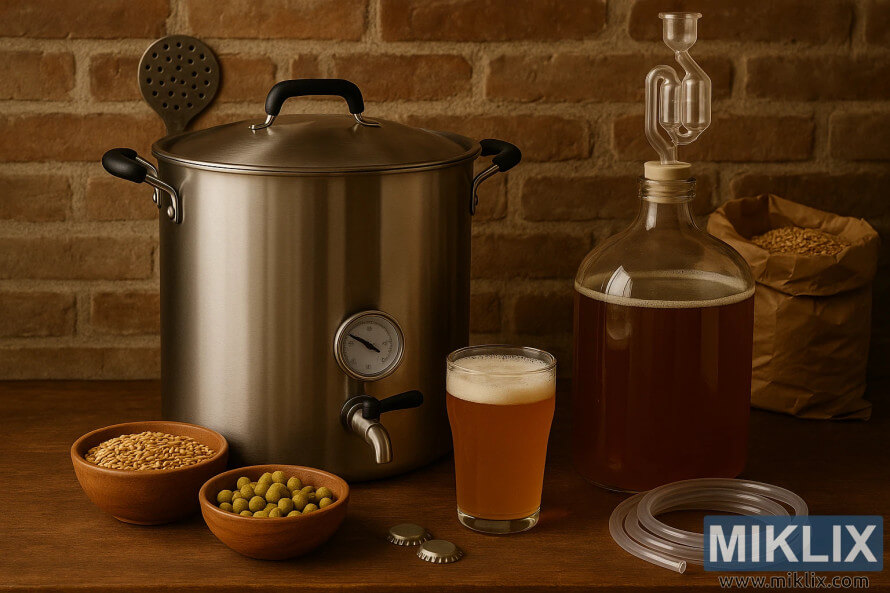
Brewing my own beer and mead has been a big interest of mine for several years now. Not only is it fun to experiment with unusual flavors and combinations that are difficult to find commercially, it also makes some of the more expensive styles much more accessible, as they are quite a bit cheaper to make at home ;-)
Subcategories
In beer brewing, adjuncts are unmalted grains or grain products, or other fermentable materials, used alongside malted barley to contribute to the wort. Common examples include corn, rice, wheat, and sugars. They are used for various reasons, including cost reduction, flavor modification, and to achieve specific characteristics like a lighter body, increased fermentability, or improved head retention.
Latest posts in this category and its subcategories:
Using Rye as an Adjunct in Beer Brewing
Posted in Adjuncts July 24, 2025 at 7:35:45 AM UTC
Beer brewing has seen a significant evolution with the introduction of various grains as adjuncts. These additions enhance flavor and character. Rye, in particular, is gaining popularity for its unique contribution to beer. As an adjunct, rye is added to barley to create a more complex flavor profile. This addition can enhance the beer's experience, broaden its flavor, or increase its mouthfeel. It offers brewers a versatile ingredient for experimentation. The use of rye in beer brewing reflects a larger trend in craft beer towards innovation and diversity. Many brewers are now exploring different grains to create unique beers. Read more...
Using Oats as an Adjunct in Beer Brewing
Posted in Adjuncts July 23, 2025 at 6:23:42 AM UTC
Breweries are always looking for new ingredients to create unique beers. Oats are becoming more popular as an adjunct to enhance beer characteristics. Oats can greatly reduce off-flavors and improve beer stability. They also add a silky mouthfeel, a key feature in many beer styles. But using oats in brewing comes with its own set of challenges. These include increased viscosity and lautering issues. Brewers need to understand the right ratios and preparation methods to fully benefit from oats. Read more...
While not technically a defining ingredient in beer (as in, something can be beer without it), hops is by most brewers considered the most important ingredient apart from the three defining ingredients (water, cereal grain, yeast). Indeed, the most popular styles of beer from the classic Pilsner to the modern, fruity, dry-hopped pale ales rely heavily on hops for their distinct flavor.
Latest posts in this category and its subcategories:
Hops in Beer Brewing: Sonnet
Posted in Hops March 31, 2026 at 8:41:45 PM UTC
Sonnet hops are celebrated for their delicate floral and honeyed aroma. They are a favorite among brewers for their ability to enhance aroma-driven beers. The Sonnet hop profile offers a unique blend of honeysuckle, light citrus, and subtle earthiness. This combination is perfect for elevating the flavors of English ales, lagers, and modern hybrid styles. Read more...
Hops in Beer Brewing: Saxon
Posted in Hops March 27, 2026 at 5:49:41 PM UTC
Saxon hops are a British aroma hop, cherished for their clear, old-world character. Brewers seek this traditional balance in their recipes. The Saxon hop profile offers floral and mild earthy notes. Its moderate alpha acid of about 9% makes it versatile for late additions and blending. Read more...
Hops in Beer Brewing: Santiam
Posted in Hops March 25, 2026 at 7:02:20 PM UTC
Santiam, an American aroma hop, emerged in 1997. It's celebrated for its soft, herbal, and floral notes. These characteristics are ideal for India Pale Ales and American Pale Ales. In the United States, brewers also employ it to enhance the aroma in lagers and other European-style beers, seeking a gentle noble-like quality. Read more...
Malt is one of the defining ingredients of beer, as it is made from cereal grain, most commonly barley. Malting barley involves allowing it to get to a point where it is just about to sprout, as the grain creates amylase enzyme at this stage, which is is needed to convert the starch in the grain to simple sugars that can be used for energy. Before the barley is fully sprouted, it is roasted to stop the process, but keep the amylase, which can then later be activated during mashing. All commonly used barley malts can be broadly grouped into four groups: Base Malts, Caramel and Crystal Malts, Kilned Malts, and Roasted Malts.
Latest posts in this category and its subcategories:
Brewing Beer with Golden Promise Malt
Posted in Malts August 13, 2025 at 7:55:45 AM UTC
Golden Promise malt is a favorite among brewers for its distinct taste and sweeter profile. It's akin to Maris Otter but with a unique twist. Hailing from Scotland, this malt has been a cornerstone in brewing for decades. Using Golden Promise malt allows brewers to craft a variety of beers with a richer, sweeter taste. Its sweeter flavor is a draw for those aiming to set their beers apart from others made with different malts. Read more...
Brewing Beer with Caramel and Crystal Malts
Posted in Malts August 12, 2025 at 6:26:45 AM UTC
Brewing beer with caramel and crystal malts is a complex art that deeply impacts the beer's flavor and color. Experts agree that using these malts is a simple yet effective way to alter beer's taste. This method allows brewers to create unique and complex flavors. These specialty grains bring depth and complexity to a wide range of beer styles. From pale ales to porters and stouts, they play a key role. Grasping the production process, types, and characteristics of caramel/crystal malts is vital for brewers. It helps them craft beers that stand out from the rest. Read more...
Brewing Beer with Maris Otter Malt
Posted in Malts August 11, 2025 at 5:17:51 AM UTC
Maris Otter malt is a premium British 2-row barley, celebrated for its rich, nutty, and biscuity taste. It's a favorite among brewers for crafting high-quality beers. This malt variety hails from the UK and has become a cornerstone in British brewing. It adds to the characteristic flavors of many premium beers. Its unique taste enhances the brewing experience, enabling brewers to create complex and nuanced beers. Read more...
Yeast is a necessary and defining ingredient of beer. During the mash, the carbohydrates (starch) in the grain are converted to simple sugars, and it is up to the yeast to convert these simple sugars into alcohol, carbon dioxide and a host of other compounds during the process called fermentation. Many yeast strains produce variety of flavors, making the fermented beer a completely different product than the wort the yeast is added to.
Latest posts in this category and its subcategories:
Fermenting Beer with Wyeast 2124 Bohemian Lager Yeast
Posted in Yeasts March 31, 2026 at 8:39:45 PM UTC
Wyeast 2124 Bohemian Lager Yeast is a classic Carlsberg-type yeast, favored by many American homebrewers. It's known for crafting clean, malt-forward lagers. Read more...
Fermenting Beer with Wyeast 2105-PC Rocky Mountain Lager Yeast
Posted in Yeasts March 27, 2026 at 5:47:50 PM UTC
Wyeast 2105-PC Rocky Mountain Lager Yeast is celebrated for its clean, malt-forward profile. It hails from Colorado and is a favorite for North American lagers. Read more...
Fermenting Beer with Wyeast 1762 Belgian Abbey Style Ale II Yeast
Posted in Yeasts March 25, 2026 at 6:59:05 PM UTC
Wyeast 1762 is a sought-after liquid culture for homebrewers and professionals aiming at crafting rich, complex Belgian and strong ales. This strain's versatility and performance in high-gravity beers make it a favorite among brewers. Read more...